Showing posts with label writings. Show all posts

Sunday, November 11, 2012

MUECK. RON MUECK


ron mueck is another amazing guy.
he is an ny based australian sculptor if I'm not wrong and he's also another hyperrealist sculptor and mainly uses silicon or resin/fiberglass to construct 
his sculptures.

in some ways, both hanson and mueck are similar. they both create hyperrealist sculptures and somehow both deal with the human condition. there are slight difference in both of them as well; hanson focuses more on the mundane and banality of life, emphasizing insignificant ordinary people and actions, attending to stereotypes in the american society. mueck on the other hand focuses more on the process of life, for example, birth, death, pregnant women, and sometimes a little on the mundane life as well. however, the most significant difference is how both artist treat the scale of their sculptures. hanson's sculptures are mostly life sized, such that people can relate to it and there is direct interaction between the sculptures and the viewers. mueck's sculptures on the other hand are either extremely big or smaller than life sized. the difference in size of the sculptures and the viewers have a different impact as compared to hanson's sculptures.  the effect of the scale (interaction between the artwork and the viewers) will be discussed later.


-acting god? creating human?


a girl
1. theme, irony and size
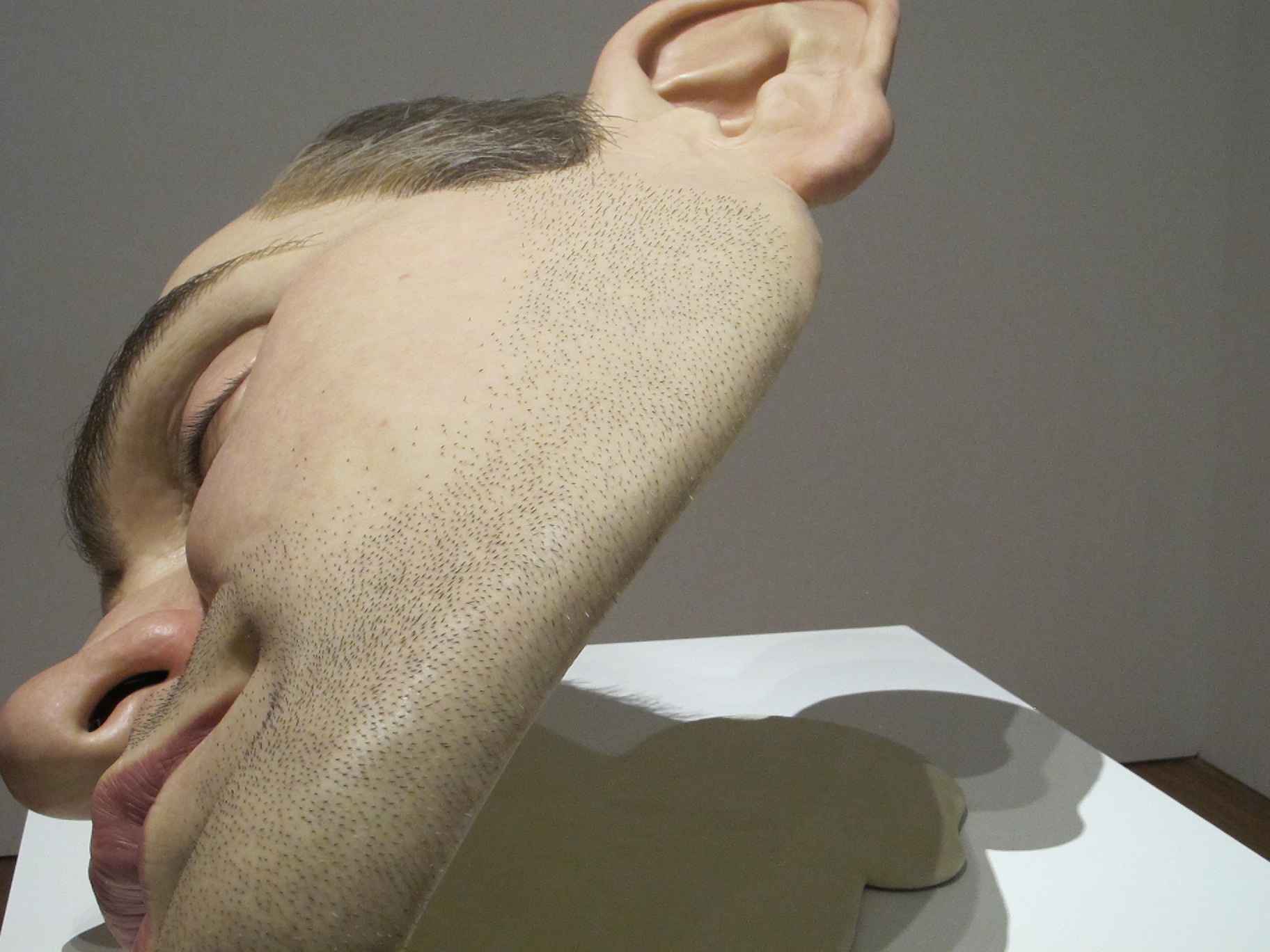
In the main gallery, Mueck’s 17-foot-long figure A Girl lies frozen and alone, her giant baby fists clenched and her enormous newborn eyes struggling to open for the first time. Known for using scale to distort viewer perception of his subjects, Mueck crafts his sculptures out of proportion in order to elicit a psychological presence of frailty or dominance.
Demonstrating the monstrosity of birth and the beginning of life with A Girl, Mueck’s exaggeration of size and life situation swings to the other end of the spectrum with Old Woman in Bed, a diminutive sculpture (less than a foot in length) of an old woman nearing the end of her days. Situated in the room next to A Girl, the woman is seemingly curled up asleep underneath a swath of blankets. But upon closer viewing, her eyes and mouth are half-open, with heavy lids barely able to blink and thin lips parted as if taking a last gasp.

Banal items of everyday life, when grouped in the thousands, compels our reconsideration of their relevance around our lives. Much in the same manner, Ron Mueck’s hyper-realistic sculptures amplifies human emotions and situations, forcing one to reconsider the relationship that we all share with one another.
“Ron Mueck does two things very well: he gets under the skins of his hyper-real figures, and he uses scale to expose vulnerabilities. [There is] a supine newborn baby the size of a small bathroom, its fetal blood not fully wiped away and its umbilical cord dangling like a thick, twisted rope. Each figure’s eyes mirror his or her soul. [There is] a hairy nude giant with crossed eyes seems fearful of something small. [There is] a woman the size of a Manhattan bedroom stares over the covers of her oversized bed, unready to face the day. [There is] a black man’s giant round face exudes ambition and, perhaps, frustration. [There is] a naked couple curled, spoon-style, against each other, sharing their warmth but not their thoughts.” (James Cohan) 

there is always irony present in mueck's work. for instance, the size vs the subject matter. for instance, in the work 'a girl' the newborn girl is blown up to the size of a toilet (maybe) whereas 'dead dad' is smaller than life size and the subject matter is a dead man. the juxtaposition of the meaning o the size and meaning of the subject matter is obvious.
huge = overwhelming, strong, brave
subj matter = small newborn baby, have yet to experience anything
small= frail, weak, insignificant
subj matter= old man, experienced many things, full of knowledge
there are different ways to interpret the meanings. for example, the baby is still young, and can absorb and learn many new things, hence the size, all big, full of hope. the old man is already dead, no matter how many things he can learn, he can't because he is no longer alive, hence showing how small and insignificant he is.

and i just realized how tough it is to categorize things because they are all inter related. i guess i'll just stop and continue at the interaction with audience part haha
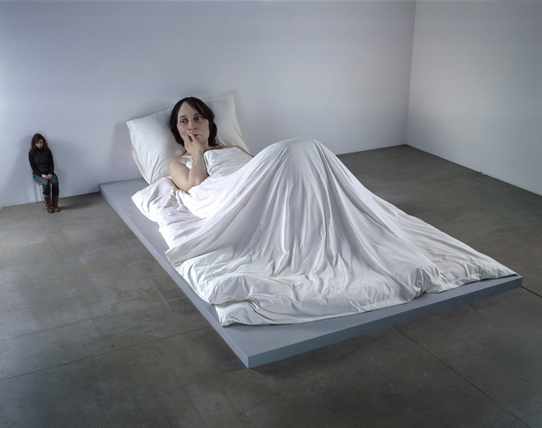
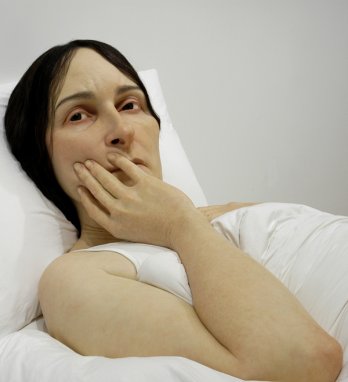

woman in bed

2. interaction between viewers and artwork

“It is not that we identify with the figures; rather, we wonder who they are and how they are going to resolve whatever dilemmas they seem to face. We empathize. Since scale and size vary throughout Mueck’s work, viewers have off subconscious relations to the spatial displacements between the sculptures. We approach the large ones as though they were giants, even though most of them seem unsure of themselves. Some small ones seem less fragile. Mueck reverses our usual notion that larger is stronger and smaller is weaker. The baby compounds this direction by being huge, strong, and fragile all at once. It is built like a tank, but the unfocused and inward eyes reveal that it cannot serve its own needs. Mueck’s visceral figures engage viewers in what ends up being a philosophical investigation of the human condition.” (James Cohan)
I think the main reason that Ron Mueck’s work is so powerful and affecting is that they all convey themes and feelings that we all understand - anxiety in life, fear of death, unexplainable and illogical phobias, that inherent need to be loved and accepted, the slow burning of desire - these are all emotions that we all can relate to in one way or another. And they become ever more so relatable when projected through massive depictions.

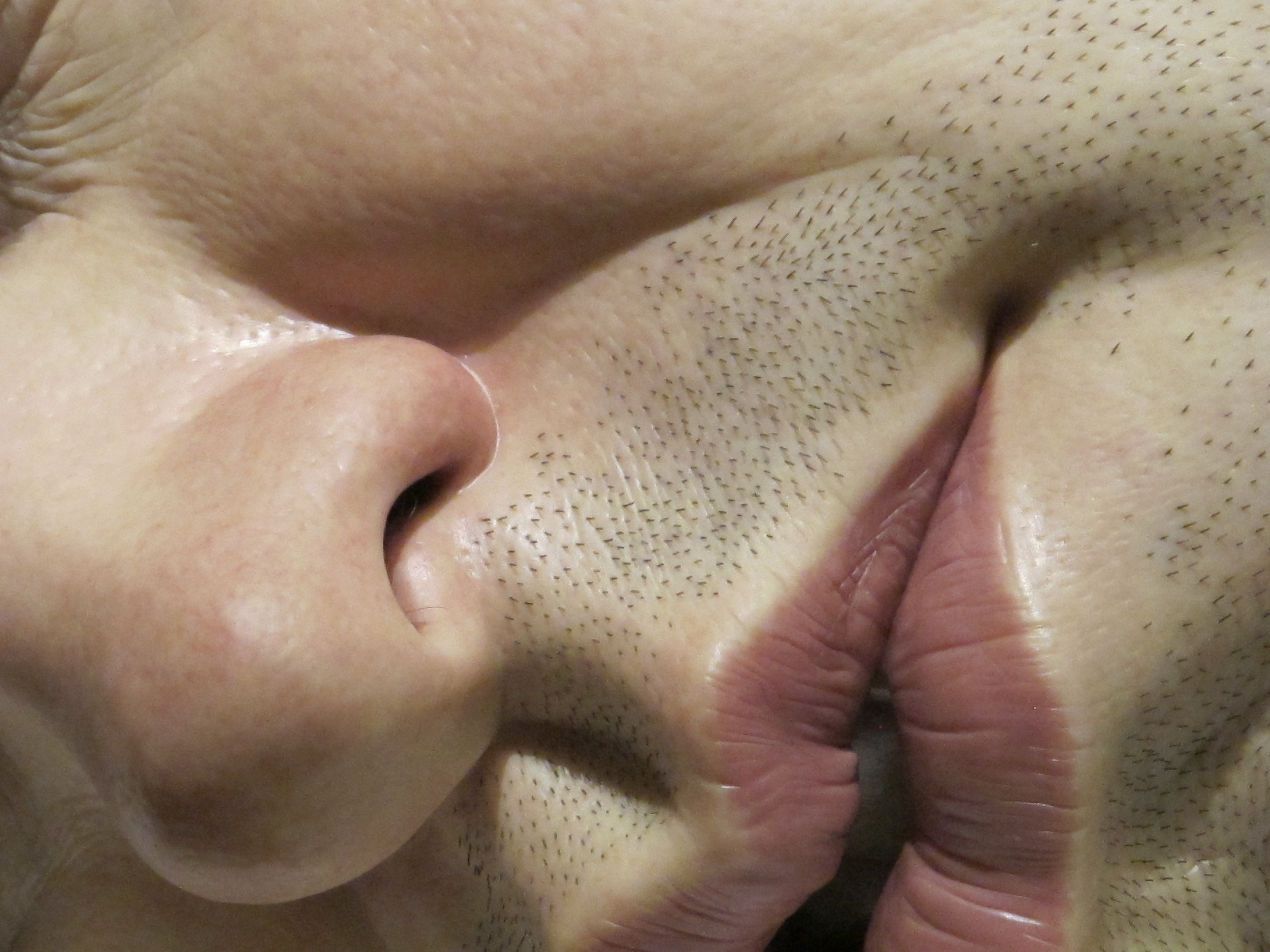
every single detail is reflected on the sculptures, from blemishes and moles to eye bags. such blemishes are often covered up in real life and is hidden from the world. such blemishes can only be seen by the person themselves, after the clothes and makeup fall off. however, in his sculpture, everything is clearly shown. its like staring into a mirror, the sculptures are a reflection of us. so technically, viewing mueck's work is like looking at yourself in the mirror, with your flaws shown to you. it is because of this that the audience can connect so well with the artworks.
mask

dead dad

3. materials and procedure
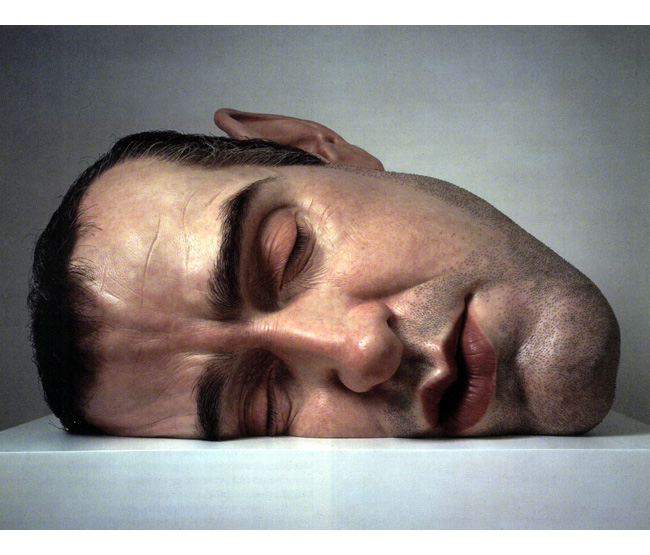
 ron mueck uses a variety of materials for his work, mainly resin, silicon and fiberglass. for this particular work pregnant woman, mueck used fiberglass/resin (i forgot which) to create the body. however the face is created using silicon. by using silicon, mueck can easily achieve an extremely realistic face whereby he is able to put/punch each individual strand of hair, eyelash, eyebrow into the sculpture's face.

i have never actually work with resin/fiberglass/silicon but i would like to try working with them 


i couldn't upload part I :/ but here's part 2.
the way he works with his mediums, from the draft to a scaled down version with realistic and precise features made of clay, to the blown up sculpture made of a mixture of materials. to me, hyper realism is a style only suitable for perfectionists who are willing to spend so much time and effort on a single piece of work. it is also because of the perfectionist nature in the artist that the sculptures are able to appear so real. i think an impressionists artist or futurist artist/sculptor will probably never achieve such perfection and detail. i like the effect of the first clay sculpture he made. this sculpture serves as a basic model which gives him an impression of how the sculpture would look like. there is little to no detail, only rough outlines and silhouette. the clay  model is rough and uneven (i like the texture). the clay he uses is different from what i had in mind. i guess this is due to the lack of experience?furthermore,  the materials i've been exposed to are not a lot. my idea of clay is like those pottery clay haha. i'm not sure whether its the same clay but it looks kinda different in the video. 

anyways, this is only the basic model. after deciding on the pose, he works on a larger and detailed sculpture. by using a wire armature to support the sculpture, he added clay around to shape the sculpture into the form of a pregnant woman. with his tools and hands, he carefully shapes the facial expression, fingernails and other details into the sculpture. after this is done, he will have a extremely detailed mini sculpture. he then creates the final sculpture. (my goodness so many steps zzz) so for the giant sculpture, first, mueck uses wires to build the basic structure of the sculpture, he then uses bandages (gauze) soaked in plaster of paris and wraps it around the wire armature. after the bandage has dried, mueck then slaps on clay  to create the mould. slowly shaping it, smoothing it, adding clay, subtraction clay, the forms of the pregnant woman slowly appears. after he is done with the mould, he goes on to coat the mould in silicon (if i'm not wrong, or at least grease it to prevent the initial sculpture from sticking to the mould. not sure about this) he also uses wooden pegs to mark the specific spots so when he puts the mould together, he would know exactly which crack fits which crack. it is this kind of planning and detailing that allows him to create such realistic sculptures. sometimes, the clay sticks to the mould and it's hard to remove cause there are tiny crevices and lines. in this case, mueck has to cut/chip/saw/break  the clay in order to take out the mould. he then reattaches it using the help of a wooden scaffolding. 

 it is a really complicated and tedious process. 
so he fills it the mould up with liquid resin/ fiberglass (not sure how its done, I'm guessing its poured into the mould when is in liquid form). he look the face out and made one more using silicon. he then slowly and tediously sticks each strand of hair into the silicon since silicon is soft. (i will go crazy at this point) with this, he has full control over how the facial hair/hair will look like, enabling him to fully recreate an extremely real sculpture

for the sculpture dead dad, this is the only sculpture in which mueck uses his hair for the whole sculpture. i guess its like respect for your late father, using his hair to represent his father's hair, its a little like transferring his soul (which is made from his mum and dad, aiya you get the meaning) into the sculpture.
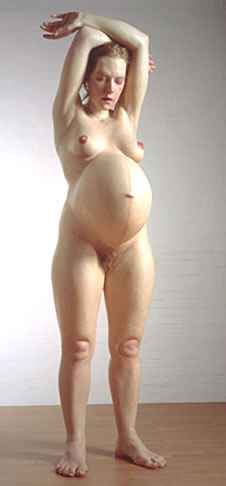

pregnant woman 2002

mueck's work prompts us to question the ideal real in contemporary art. 

what is real? his works are looks absolutely real. yet it looks fake because its sooo real to the point that its too real to look real. okay this sounds confusing. the blemishes which he proudly shows are something that even normal people try to cover up (be it with makeup or clothes). cause of all these cover ups, we don't even see these blemishes in real life. seeing all of these on the sculpture kinda makes it seem unreal. the size of his sculptures are also not real. but he captures emotions so well such that there seems to be some sort of soul in the artwork. 

so what is the ideal real? 


the artist, artwork and the audience

its been a while~ didn't do well for my exams sigh.

anyway we were given an intro to h3 some time ago and my post today would revolve around the artist, the audience and the artwork. i guess different people have different definitions of what an artwork is, who can be considered an artist. i'm very sure my response will change from now on as i know very little about the art world. my knowledge on artists and their artwork is very, very limited. as i explore and learn more, i can say for sure that my definitions will eventually change.

but anyway, here are my thoughts at this moment.

my definition of artist is rather strict and many of you may not agree with it but its my own personal thoughts.  an artist must be someone who partakes in the making of his artwork. meaning he has to be physically involved in his work. and to call an artwork his, he has to come up with the idea of the work himself. okay this all sounds really confusing but let me try and give an example to clarify things. lets say marc quinn, most of his sculptures aren't done by him. he came up with the idea, so the artworks such as "plane" and "chemical life support" can be said to be HIS artworks. however i wouldn't call him the artist in this case because he doesn't create the sculpture himself. at most he'll pop by to check out his work and make sure everything is right but he doesn't make the mold, etc. maybe he does the mini clay armature... okay so does it make him the artist? since he made the initial clay armature itself?? my definitions are so hazy that I'm sure they'll change.. someone who helps another person create his/her work is not an artist because although he is physically involved in the creation of the artwork, the artwork is not his. and back to my definition: an artist must be someone who is physically involved IN HIS ARTWORK. yeah this is a rather strict definition and it'll be tough to categorize 'artists'. however i realize yet another loophole, and that is my definition may change yet again depending on 'leisure artists' and 'commercial artists'

the artwork. the artwork, as mentioned above, is the work created by someone. it can only be called eg. XXX's artwork if XXX came up with the idea/concept. if not it can only be called an artwork but not XXX's artwork. then again, what constitutes an artwork? i mean how do you brand it a work of art? when is a work a work of art and when is it not? what is art? if its created by the artist (link to the above para on what is the def of an artist) then its called an artwork? what if its not created by the artist? XXX comes up with the idea, but he doesn't make the work. instead AAA makes the work. so both XXX and AAA are not artists (according to my definition) but the work is placed in an art gallery. therefore is the work an artwork?? or just a work? is there even a difference between an artwork and a work of art? my definitions now are rather confusing so please don't mind me. it'll be interesting to ask yourself what do you consider an artwork, who do you consider an artist and the audience.

for audience, there's 3 kinds of audience. one is the general public. ANYONE who sees the work is immediately called an audience. whether he or she knows about the artist/background of the artist or work/ meaning behind the work. they are allowed to form their own interpretation and understanding of the work. the other kind is the intended audience. audience of that specific time/period whereby the artwork (I'm using the term loosely here) and the audience resonate with each other. e.g. duane hanson's tourist II may be intended for the people of that time whereby the dressing suits that period of time and the work is able to blend in with its surroundings. the last group of audience is the people of the artwork. the critiques, the art buyers/traders/collectors. they will have their own thoughts an ideas which may be different from others. fauvist works such as those by matisse were actually rejected by critiques of that time, saying the works resembles those of a beast. but look now, fauvism has become a well known style.

i also feel that to be an artist, one must not be too sensitive. there are many people in this world and there are many interpretations of one single work. all the various interpretations may not have been your initial interpretation/what you want others to think. however you must accept the other interpretations as they may be more insightful that your very own impression. or, you can see it in another way. your skills aren't up to par such that your technical control, composition and etc does not help in bringing out your message, such that people can derive other meaning from your work. then if you wanna be angry, you can only blame yourself. there is no contract/ obligation that others must follow your meaning. in fact, i personally feel that the audience should at least try to understand the work and derive your own meaning before listening to guides on what the artwork is like. because you will be swayed and immediately think 'ohhhh so this is what the artist meant' and your own creativity and imagination is killed. it'll be more interesting to go 'hmm i think its ...' then 'ohhhhhhhhh so its like that. but its cool that i thought of it differently/ yup yup that was what i thought too/ i knew it!' it makes art exploration much more meaningful.

also, lemme say a little on what i think the function of art is. the function of art is to EVOKE AND PROVOKE. to me, an artwork is not really effective/ interesting to me when all it does is to paint what people see. unless you're talking about skills like photorealist. their skills are so good that i can stand and stare at the painting for hours thinking of the methods the artist use to create his work. art should make you think. think about the material, the technique, the process, the message, the meaning, the hidden meanings. sometimes i would step into the shoes of the artist and think, is there anything i'll change about this work to bring about this particular meaning and why? i like artists who use new mediums and i'll think of how the work is being done. i also like artist who uses traditional medium to create interesting hidden messages. weird and unique artworks for example, merging of different animals/humans? instead of painting a scenery. i think weird works are more interesting. however, a work that is too abstract would not be able to catch my attention because its too 'far'. i cannot really 'interact' or 'click' with the works. (okay I'm losing all my words here somehow i can't think of the correct words now. maybe too tired :/) art cannot merely capture what we see because now we have cameras. art has to evoke thoughts from the audiences/provoke them, allowing them to think.

okay thats it. I'm gonna sleep. will edit this another time. bye~

Tuesday, July 3, 2012

post NY


HCAEP New York trip was once of the best trips (okay all art trips are nice). Firstly, there wasn’t any rush unlike the London paris trip we had in sec 3 where we crammed many museums in one day, although I suggest that certain museum’s timings are abit to short, and some abit too long. For example, for whitney and smaller museums, around 2 hours to 2 and a half hours would be sufficient while larger museums such as national history and MET should have around or more than 4 hours because there are just too many things to sketch!

Secondly, I knew everyone better after this trip and realized that this trip has changed some of us, one clear example would be Esmond. Prior to the trip, Esmond was firm in saying that abstract art isn’t effective art but after the trip, during the sharing, he was a total convert! My sentiments stay the same before and after the trip though, that I cannot really connect with abstract works, but I really do enjoy looking at how the works are create, for example the materials used, how and what the artist used to achieve such effects such as the works we see while gallery hoping in Chelsea (the flower in solidified wax/liquid foam and the glazed medium work). This has made me realize the importance of materials and the range of effects and materials I can actually try exploring. This trip has prompted me to try stepping out of my comfort zone and consider sculpturing for ILP)

Thirdly, there was sufficient shopping time! Though not really related to art, I was able to experience the America culture and being a tourist myself made me think about Duane Hanson’s work. Are we Asians being stereotyped because some of the people were not very helpful towards me while some are. When we wanted to ask for directions, some would ignore us and we kept asking tourists instead of local which made me wonder if they are really local or tourists and is there a way to differentiate them, like how Hanson did. If there is a way, does that mean that I have subconsciously stereotyped them?

Some works are really mind-boggling but art has allowed me to be open-minded and be accepting of various things. Before attending AEP, I used to have a preconceived ideal of what art is and if the works do not fit into the ‘ideals’ then it is not considered art. After the sec 3 trip, I saw many old master works, the typical kind of art you would expect in a grand museum and some modern ones which made me raise my eyebrow. After visiting SAM and 8Q I began to accept ‘art’ as it is. After the NY trip, there isn’t really a clear boundary where I can say what is art and what is not. Art is subjective but few have realized that. What we think may be nice to us may not actually be our opinions but rather influences from others, the environment and background knowledge we have. We have restricted ourselves in Singapore. There is a clear line between what’s art and what’s not, for example, vandalism, here in Singapore due to the culture and environment. However, there isn’t a clear line between these two in NY. Why the great difference? This will be a problem if the government intends on making Singapore into an art hub. Sure, we have interesting architectures and galleries and there’s the biennale and art festival. However, only under these circumstances would be refer to works as ‘pieces of art’. Outside these contexts, we don’t consider art to be art. (Well, I still think they are art but others don’t)

This made me think (on the last day during central park reflections) is there a limit as to what you can call art and what not? Hence, there isn’t a way to actually judge art because different things appeal to different people. I’m not really questioning art teachers because I know they have to carry out their job and have a guide for marking due to the education system. Furthermore, according to Mr Lim Kok Boon, what we are learning now isn’t art, but rather it is just art education. You don’t do art unless you are out on your own in the world, without any restrictions. Then again, when art becomes a commodity, is it still art, or has it morphed into a business to ensure one’s survival? So, back to the topic, how do people judge one’s work for a competition? Is there yet another guide line? If so, shouldn’t the guide line be shown to us for fair competition? If there isn’t, does this imply that it is based on the judge’s own aesthetic appeal? Is that why we have a panel of judges instead of one judge?

Furthermore, fashion has a trend, such that it goes in a circle and the trends can be recycled. Will art eventually be the same? We started off with idealistic human proportions and highly technical skills. Then art moved on to impressionist, capturing the effects of light before going on to more abstract movements such as cubism, abstract expressionism, hard edge, op art. Photorealism and hyperrealism made an appearance, akin to the highly technical paintings of the paste, though different. The focus on the details is back with a greater variety of mediums. Will we eventually come back to appreciate master works (not saying now we are not but I personally feel that the exposure to the variety of art has made we lost certain interest in master works)? Or will such works eventually lose their appeal and value with the rise of contemporary, controversial art such as ready mades? Does art constitute to the technical abilities and appeal or is it just the meaning behind a piece of work or is it just a reaction towards something? It may be because of technology, that what I see and what interests me are more of the controversial artworks and new mediums although I still appreciate master works. Now, to me, good art should include good technical control, meaning and appeal, although appeal is not that important.

However, this also contradicts how I always say ‘I create art because I want to and not for any particular reason’. I guess one should start off with a message or idea before doing art, and explore and discover while doing art, which will add more meaning or allow you to view things in a different light. To be, art is about enjoyment and self-discovery, in which both were experienced during the trip. I realized that I like sketching and discovered my own style of sketching. I can describe my style as fast, sketchy though controlled.  I personally think I sketch kind of fast. Although people say that you should take your time and that you need patience to do art, I think that art can be fast. I guess my character is reflected in my style: I like to do things fast and even though I am rather messy, there is some neatness to my disorder! It would be interesting to have the class share their sketches one day and to ask the class to identify who’s sketch belongs to who and perhaps how the sketches reflect our personality. It’ll be interesting!
All in all, I really enjoyed the trip and it made me think through my pre assumptions about art , what I am actually doing and what is going on around me. It also allowed self discovery and I understand everyone better. I guess this trip really bonded the class as a whole and it will one of those unforgettable trips!


Wednesday, March 28, 2012

duane hanson

the hyper realist and verisimilitude

we're currently covering the hyper realist artists in SOVA and i was doing (actually i'm still doing) the matrix thingy but i'm so amazed that i had the sudden urge to just type some things. after looking through Ron Mueck's work, i can't help but be amazed. if i had the chance to see it in real life, i could probably spend close to 15 mins on one sculpture of this, looking at every singly detail of this sculptures. the same goes for duane hanson's works.

DUANE HANSON

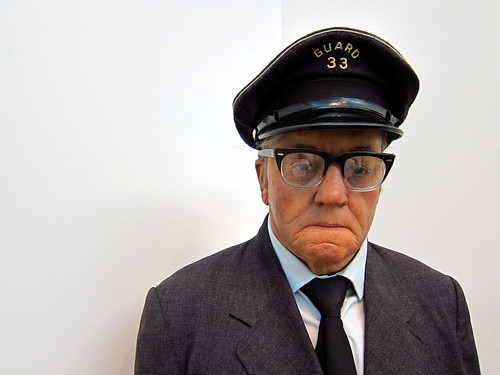
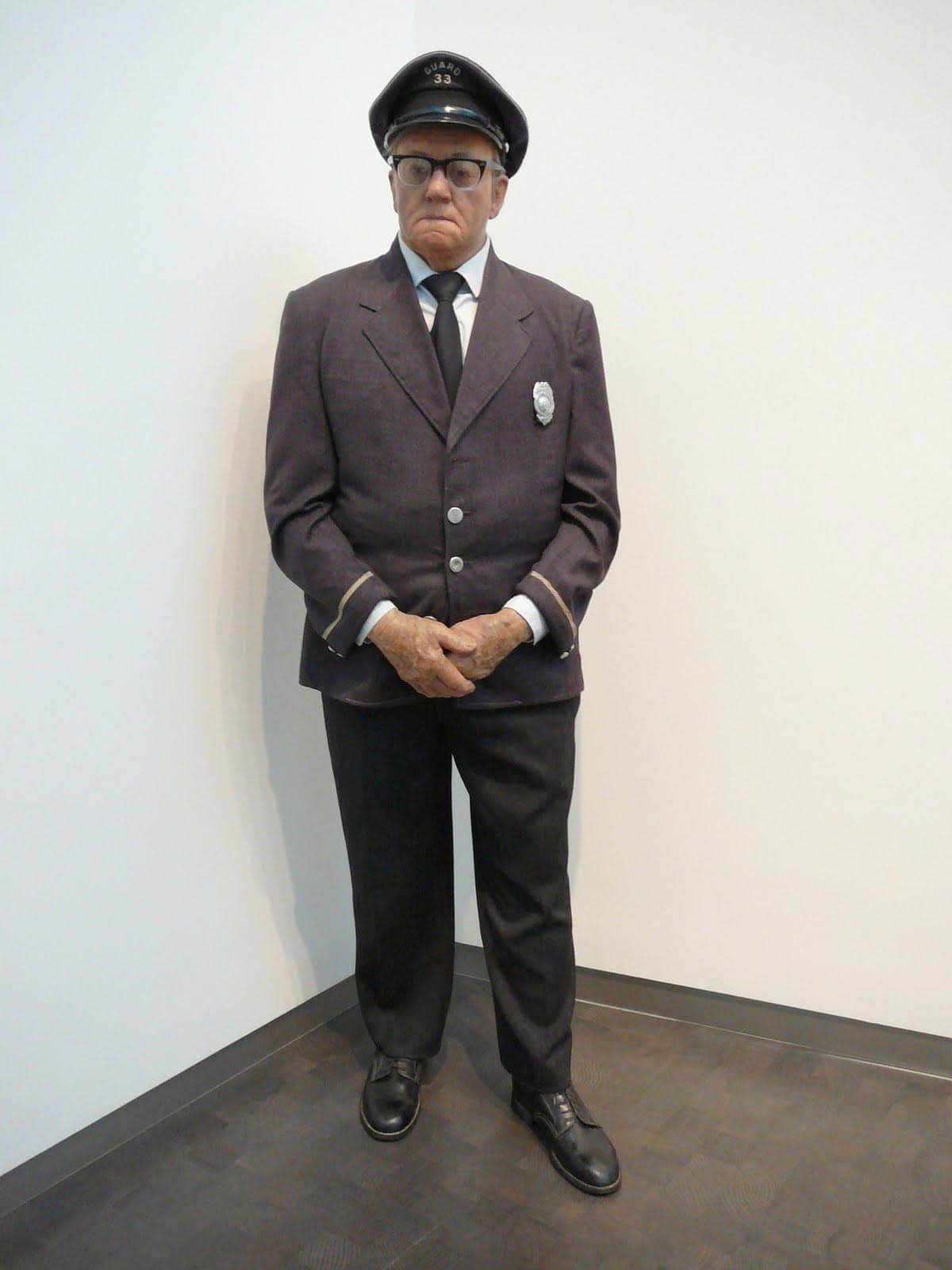
he's a hyper realist sculptor and his works are true to scale, life sized and hauntingly realistic. verisimilitude. seriously. just learnt the process of how he creates his sculpture. (talking about processes, this reminds me of chuck close, maybe one day i'll blog a little about my thoughts on him) i personally think the hyperrealism is really cool. its probably one of the most interesting art movements. this is because the artworks are so real that we can easily relate to it. duane hanson's works emphasizes on the human attitude and relationships, the mundane and banal lifestyles of inconspicuous, ordinary, average people is one of the main themes in this work. the stereotyped and prejudices stored in european (and perhaps chinese or any other race) brains concerning the american lifestyle. 

because the works are so real, you can't help but question them at first sight.  ms ong asked us (in pairs) to form some questions regarding duane hanson's work, such as tourists II. and then we exchanged with the other pair and answer their questions. one of the question the other pair asked was where are the artworks placed and i guess it was placed in a random place in the museum such that it blends in with the crowd. if i were the artist, i would do that. and indeed, that was what hanson did. the sculptures (seen in tourists II) were just placed in the middle of the gallery. at first glance, i would probably ignore the sculptures because they are simply too realistic. i would be oblivious to them, probably thinking their some viewers in the museum. if i weren't observant enough, i may just pass the sculptures without even knowing about them. but if i'm observant enough, i would realize they aren't moving and will cautiously approach them. upon closer inspection would i then realize they are actually an artwork. then. i'll be amazed. and i'll be shock too. then i'll scrutinize the artwork really carefully because its just simply too realistic. 

this would be my reaction.

on a side note, one should bear in mind that his work was created in the 1960s-1990s, so the clothing matches the time period of that era, hence it would really blend in with the surroundings. it would be more obvious that the sculptures are actually sculptures and not real human beings now because the dressing style is different. 

this made me think of a few things.

1. the context and the artist
the 1970s-1980s in america was the age of consumerism, greed and excess. the television was popular and the lifestyle of the rich was shown to everyone who owned a television. unrealistic expectations form and the line between 'want' and 'need' blurred. duane hanson brought together and featured everyday commodities emphasizing on the mundane, everyday imagery. the lifestyle of the middle class people were emphasized. furthermore, the pop period was after WW2. majority of the feelings were jaded, solemn due to post war. however the pop movement reflected a more childish, fun and less matured view of the society. there was more freedom, the age of excess and a reaction to abstract expressionism. why would hanson wanna emphasize the daily activities of human? we have become so oblivious to what we're doing that it has just become a daily routine to all of us. seeing an old man on a bench is a common sight, there is nothing special or grand about it. most of us would probably ignore the old man, helpful Samaritans would go up to him and ask if he needs any help. such a scene has lost it's meaning, for most of us, it exists to exist. however, such artwork would probably lose its initial meaning in the modern world. the dressing style of the cleaner and the tourists are obviously different that people would notice that there's something odd about these people and would soon realize the sculptures.  would these artworks eventually lose their value in the near future? does this mean that they will just become one of the many artworks in the museum, and that there is no longer this essence of surprise?

old man on a bench
2. the artist and the artwork. 
how did duane hanson choose his subjects? is it picked randomly? or is there some sort of specific target group? majority of hanson's works showcase stereotyped people, for example american tourists, museum guard, cleaner. they all have a stereotype. (pls bear in mind we're talking about the 1960s to 1990s.) the typical american tourists would be dressed casually, with a camera hung from their necks, maybe a little overweight. a museum guard would be dressed in a dark blue uniform, probably with a hat, sitting or standing in a corner. a typical cleaner would be in a blue or green uniform, pushing the cleaner's truck or whatever you call that. ordinary people are being stereotyped. is an artist also stereotyped? what's the typical impression of an artist? i've never really thought about it. actually i didn't really make the connection that such people are stereotyped. its just in your brain already. you unconsciously stereotyped them. it may be a good thing because such people are unique and they have a certain characteristic or air that is special and unique to them. however, it may be bad because we are generalizing things way too easily and uniqueness and individuality can be lost through such generalization. it is only when told that these people are stereotyped that you actually start thinking about them. and then you realize your impression of them are already given. there are certain criteria and tags that are associated with them. it's only then that you realize that they are being stereotyped. does this mean that hanson also stereotypes these people? how did he feel while creating these work?
tourists II

3. the artwork and the viewers
like mention above, my initial impression of the works and final impression are different. first it was assumed that the works are real people however after realizing that it's an artwork, my attitude towards the work changes drastically. so what's the difference between and human being and a non living thing. why, as a human being, have we so much more interest in a non living thing than a living being? and why do our impression and reaction change so much? why do we care more for a non living thing that our fellow counterparts? why are we so amazed at this work when we see such a scene everyday? we see shoppers, tourists, cleaners but are oblivious to them but when we see it in a gallery we get all worked up. has it got to do with the place where they are found? if an object is placed in a gallery, is it's worth increased? is so why? okay gonna digress a little, if something is placed in a museum, it becomes an artwork. what if it's placed at home, will it's value decrease? why so? is a museum all that powerful? why why why?? i don't get the point. for example, if duchamp's work was placed at some random place, its called junk. if it's placed in the museum, its called art. so what is art? must art only be art when it's in a museum? or is art already everyday but have yet to be discovered/made? if art is defined as a way of expressing oneself then everything would be art. daily conversations would be art as well. but why do some art go unnoticed while some are held so highly and of great importance?whats the difference? would art then disappear one day since its a routine thing and everything thats routine would somehow soon become oblivious to us. so would art end? and the cycle repeats, art will then start of as a method of recording things again? or would it be a reaction to photography or any machine/technology things? since traditional art uses skill and effort while modern art can be ready mades or just making use of technology. would traditional art disappear? techniques from neo classicism and romanticism would disappear? would anyone attempt them again if the emphasis is on modern art, art that is thought provoking, abstract and new, and not just a picture or painting or record of things?


museum guard
4. viewers and viewers, the human condition
why are we more interested in non living beings as compared to our fellow human beings? we encounter so many human beings everyday but we're not as interested in them as compared to the art work. why when we see a realistic sculpture we get amazed and would spend time looking at the work, observing every detail. do we expect these detail or would it come as something new and interesting to us? why are we/should we be amazed at such things? these are common things that we see everyday. we notice every strand of hair on the sculptures and go 'woooooooow'. but look at yourself, and you go 'meh'. what's the difference? isn't a living being more interesting than a non living being since they can talk, they have thoughts, they can question and react while a non living being can do nothing? why do we only pay attention to artworks in a museum and ignore every other person that's in the same museum as you? is it time for us to slow down our pace, maybe time should stop for a while. would it help? if we had the day off to observe anything you want (i think one day would not be enough for me though) would we still be amazed at these artworks? or will they appear normal and uninteresting/less interesting to us? we interact with the artworks more than we interact with one another and that's weird. even though we are humans, why are we still figuring out the human condition? why is the human condition so complex? why do we think so much? why do we question? would there be lesser misunderstandings if we can't question/lose the ability to question? why are we so interested in these sculptures but would rather spend our time with real human beings? i would like to know when seeing these sculptures, what goes though your minds? when viewing these sculptures, we probably would be so amazed and would look at every detail but when put in a room with the sculptures, we may be afraid of them as they are very real. why so? why the sudden change in attitude due to the change in environment? also, we can get bored of these sculptures after a while but why do we not get bored with our best friend? our spouse? our partners? isit because of their ability to speak? what is it that attracts us to these works?

queenie

okay these are just thoughts and i just wrote it in the stream of consciousness way. theres a lot a lot of questions, dramatically incorrect. these are raw thoughts heh. will do one on ron mueck soon!


Monday, September 26, 2011

coursework.

argh. i didnt want to post my coursework till everything is done 
pictures below show the progress of my work. 


(picture and word post)
COURSEWORK 2011

bt2


i saw eli had included her essay as part of her essays. LOL sounds funny. so i'm gonna include mine too, for convenience sake as well haha
\
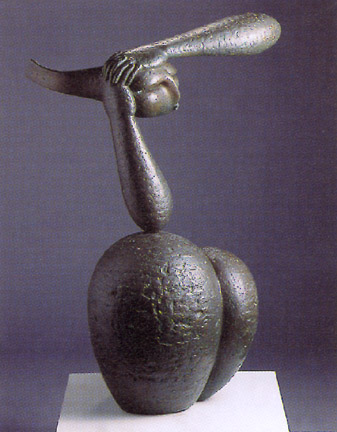
Looking Ahead by Ng Eng Teng, 1987
Bronze,79 x 56 x 29 cm

Growth by Han Sai Por, 1985
Marble, 111.2 x 88.5 x 40 cm

a)Describe the subject matter of both works.


Friday, September 23, 2011

jon rappleye


Fantastic Planet
acrylic and spray enamel on paper
42.375"x72" 
2008


A Litany in Time of Plague 
acrylic and spray enamel on paper
22.25"x30"
2008

Wednesday, September 21, 2011

andy goldsworthy

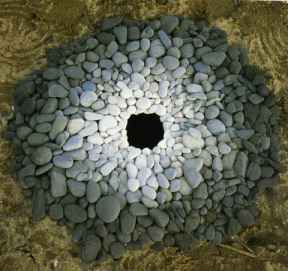
today we had SOVA lessons as per normal and covered Andy Goldsworthy. He is AMAZING. here are some of his works


                                         (toner value)
(forms, shapes, lines)

Monday, September 19, 2011

introducing an artist the same age as us: lee lip jiang!!! haha, he was in my primary school, he is now in SOTA. never talk to him but his talent is crazy!!! he has this series of work (its ongoing) and it is all base on a simple template of his face

every week or so, he would post a new picture of his face and these pictures are based on themes. so far he has 189 pictures. how cool is that? 

paying for a photo with nude artist

(this essay is slightly informal)


Wednesday, May 11, 2011

food for thought

okay so i have just attended a talk by prof T.K Sabapathy, which led me to think of some questions and im gonna post them here, in hope that someday i will be able to answer them and if anyone who is reading this has something to say or knows the answer to any of the questions, feel free to leave a comment.
okay im so tired right now. sigh
my thoughts are all raw, so its like grammatically not correct please dont mind.

1.so firstly, mr lim k.b said that what we are doing now is not art.  if you agree, theres nothing much to argue about but if you disagree and say that art is free, so why are we kept in a boundary? why are we judged and graded? doesn't it defeat the purpose of 'art' itself which is to express yourself. so if you are confined to a certain set of thinking, is it still art? still say this is art? well , but art is free. so what we are doing now is just art education, education on art, but not art itself. however, if you still insist that this is art, then what is the real meaning of 'art'?

2. our interpretations are not ours, but rather it is someone else's interpretation but we build our interpretation on it. so because we have some background knowledge of and artwork, our personal interpretations are all influenced, subconsciously influenced, by these background knowledge and who is to say that what we are doing now (in general and to art) is the right thing? what is the boundaries for right/good? what are the boundaries for art? is there even a boundary for art? this brings me back to the question: what is art actually?

3.art is created with a purpose. then can we create art without a purpose? can art be accidental?

4. no art stands alone. what are the boundaries then? is there even a boundary for art?

5.have to be socially responsible -> make the world a better place -> what do you define as good? one man's lost is another man's gain.

6. can art be judged? my interpretation is different from yours, but can you force an interpretation on me?  i choose to take path A, but you say path B is better, but i just want to take path A. is it not right?

7.what is so great about mona lisa? is it because of the artist? the skill? why is da vinci's skill considered the best then? who is to say that? also, who is to say that a certain art is very good. the curators? the museum directors? i can say that matisse's art is the best, but you argue that picasso's art is the best. so who is to decide all these things? who is to decide that what we are learning now is actually the 'right' thing to do? since our own interpretation of things, are not actually ours. who knows, we may all be sleeping and this is a dream. you know inception? someone puts a thought or a mindset in your head. and you are the 'beginning of all things' with this mindset,  you interpret something, and the next person interprets  the same thing after hearing your initial opinion and builds on it. i dare you to say that whatever you are thinking now is purely yours and you are not influenced by some other things. its just that this is subconsciously done. so right now, my thoughts are influenced by many things, many questions, my doubts regarding certain object. there will always be a connection between one thing and another thing.

8.art is such an interesting and complicated thing. (not knowledge because that is not what art is) so what is art then? is there a distinct definition?


oh and finally, what is the diff between modern and contemporary art?????is there a distinct difference?

Tuesday, May 10, 2011

Artists have a social responsibility to uphold.

Art, by the party line, is "created"  to enrich our lives, show us things in a different light, present opinions and ideas and to challenge public norms To touch us with beauty and grace on one hand and then tear away the facade that covers society's ills with the other. so do artists have a social responsibility to uphold? well, i think that there are two sides to this question, the answer can be "yes, artists do have a social responsibility to uphold", but it can also be "no, i do not think that artists have a social responsibility to uphold". i personally think that artists do not necessarily have a social responsibility to uphold, whether or not they are responsible for their artwork, it depends what kind of work is it, public or personal art.

why do artists have a social responsibility to uphold? nearly all artists create their work with a certain message they would like to bring across in their mind, be it public art or "personal art", there is an aim and a goal they want to achieve. take artists like Lucia Hartini, Han Sai Por, Ng Eng Teng, Rene Magritte for example, Lucia Hartini wants to express her fustration as a woman trapped in a society full of social expectations; Han Sai Por wants to remind us that human beings are part of nature and not apart from nature; Ng Eng Teng works are on humanity, anything to do with life, the essence of human qualities and emotions Rene Magritte tries to explore the subconscious of the human mind. such work tend to influence the viewers' interpretation of an artwork, and some works of art are quite controversial such as lyoto machida (who drank his own urine) and such artwork may offend people in one way or another. which brings me to the main point, whether or not artists should uphold social responsibility is actually dependent on what kind of art he/she is making, for example, public art or art for his/own leisure ("personal art") public art is usually comissioned by others, for example, an organisation, therefore the artist would probably be given a theme to work with. otherwise, his/her finished work will go through checks to ensure that its content is suitable for the public and whether it will benefit the organisation because if his/her work is so controversial, it would cause an uproar and there will probably be alot of critique regarding the artwork and the organisation allowing such works to be displayed in public. if the artist's work is to be displayed in public, then he/she ought to have the consideration to tone down the "controversial level" of the artwork as his/her artwork would be open to the public, where the young and old can view the artwork and it may offend and influence the public's perception of something.
as mentioned, an art work has the ability to influence and convey messages, which can carry hidden meanings and influence others. for example, Lucia Hartini uses symbolic colours, forms, subject matter to bring across her message, which leads us to think along the way she does. another artist to consider would be David Cerny of the Czech Republic. Cerny once suggested a masturbating woman as an installation to the top of a theater in France, complete with a water-shooting man that’ll occasionally douse the crowd. David prides himself on his enjoyment of making art that generates shock reactions in people. For instance, in Prague, David erected a statue of two kindly-seeming gentlemen. The men are naked, however, and every-other second their respective penis’ are reaffirmed into their individual grips as they shift from side-to-side shooting water, recognized as piss, down into the pool submerging their feet. You can even check-out a 360 degree view of the area by clicking here. David’s sculpture is cleverly entitled nothing less than, “Piss.” Enough said. (look at picture below) such artwork has caused an uproar and much displease among the public. some find such artwork offensive and it may have a negative influence on young children. hence, when placing art in public, i find that artists have a social responsibility to uphold. however, if it is not public art, then i think its a different story, which i will go on the explain what i mean.
david cerny piss 10 Controversial Art Pieces
non public art can be works in galleries, art work which artists do in their free time, without being comissioned. such art is personal and free and their is no justified rule as to how an artwork should be like. hence it is not necessarily for the artist to uphold social responsibility, in fact,  the audience is given the choice as to whether or not they want to view the artwork, so it has nothing much to do with the social responsibility the artist should uphold. furthermore, if an artwork is too conservative, art will be stagnant and it is difficult for art to progress. also artworks are created to challenge public norms or to raise awareness regarding an issue. however, it is up to the viewers to decide whether or not they would want to view such artworks. it is not the artist's responsibility if the viewers feel uncomfortable with a certain artwork in a gallery, he/she should roughly know about the artist prior entering the gallery. even if he/she does not know about the artist, they are welcome to leave the gallery. 


in conclusion, artists have a social responsibility to uphold when they engage in public art or display their art in public. so to debate whether artists have a social responsibility to uphold, i think it depends on where the art is placed. 


edited in 2013/
i feel that there are different kinds of social responsibilities and though artists are essentially creative beings who express themselves in different ways, be it through art, dance, or writings, they should have some degree of awareness of the consequences of their work.

religiously sensitive works often always incite outrage and incur the wrath of many. Christ Ofili's 'Holy Mary' unfortunately incurred the wrath of NY mayor Rudolph Giuliani who threatened to withdraw fundings to Brooklyn Museum. This provocative work is part of 'Sensations:Young British Art in the Saatchi Collection' This painting, or mixed media i should say, is of a black woman, presumably, Ofili's portrayal of Holy Mary with a breast sticking out of her dress. the butterfly like cutouts surrounding the subject matter is supposed to mimic the angels that usually accompany such works. however, the 'angels' are replaced by cutouts of breasts, buttocks and private parts from a pornography magazine. Elephant dung is also showcased in the work and acting as a pedestal in which the title is carved onto it. Giuliani, together with other catholic groups were outraged and tried to sue Ofili. Another example is 'Piss Chirst' by Andres Serrano, whereby a crucifix with Jesus is submerged into a glistening yellow liquid which turned out to be urine. His work incurred the wrath of Jesse Halms (i really do not like this guy) who threatened to sue Serrano. Also, Marcus Harvey, who showcased a work in Saatchi's 1997 Sensations exhibition, depicting a Myra Hindley, a female child murderer, made of plaster casts of children's hands. This work resulted in a public outcry and was condemned. Harvey was faulted for trying to boost his fame by using such a controversial material for his art. This work was so outrageous that there were numerous attempts by the public to vandalize it . It is the artist's responsibility to be aware of the social repercussions that come with their world. As creative beings, im sure that they will be able to represent their ideas in another way, to reinvent and represent it such that it will not be visually offensive to people. Such works may promote wrong cultures and incite racial riots and chaos. 

some works of art literally intrude the public space, bringing inconvenience and unhappiness to the general public. Richard Serra's 'Tilted Arc' is a 3.5m rosting metal structure that stands in the middle of a public square in New York. From a bird's eye view, the structure aesthetically cuts the urban living space but from a pragmatic viewpoint of the everyday citizens who live and work around that area, this structure was an eyesore. furthermore, it resulted in the citizens having to detour to get from one part of the square to the other. 

however, i believe that art is an escape and hence should not be restrictive. artists, as mentioned before, are creative beings and should have the right to express their views. nevertheless, artists do need to be aware of the repercussions their works may bring, and therefore should reinvent their methods of presenting their message as what they present would eventually affect many people of different age and backgrounds in terms of their thinking and social- moral viewpoints.

Saturday, April 2, 2011

the warrior woman


srikandi, 1993

1a) Srikandi is a painting painted by Lucia Hartini. It depicts Lucia Hartini herself as Srikandi and there are many aspects of contrasts in the painting. 

Lucia Hartini used the space in this painting well; every inch of the canvas is covered with paint. the subject matter is magnified in the foreground. Behind her, is a maze-like structure that becomes smaller when it extends to the top of the canvas, leading our eyes down the paining, creating depth. Clouds were also used to create depth. By creating contrast in the size of the subject matter and background, and specific positioning of the subject matter, Lucia Hartini was able to create a sense of depth in the painting. Furthermore, the golden ratio is used in this painting to make this painting pleasant to see. The subject matter, Srikandi, occupies around 2/3 of the painting. By doing so, she seems to imply that the subject matter, Srikandi is of great importance. The strong winding walls consist of 2 planes, one straight and one zigzagged. They are placed side by side taking up majority of the background. this can probably mean that though Lucia Haritini appears calm on the outside, which is represented by the smooth straight wall, inside her, she is confused, frightened, uneasy which is represented by the zigzag walls. The remaining portion of the background depicts a scene of a sky, and the sizes of the clouds vary, with big clouds nearer to us and small clouds further away from us. Yet again, a sense of depth and is created, making the vast sky appear endless.  

She used vibrant contrasting colours to paint this painting and her colour palate consists of mainly blue and vermillion, which are contrasting colours. the golden brown Srikandi is draped in a bright blue flowy cloth, which also drapes around the vermillion winding walls. The background is of a mixed of a morning scene and a night scene, whereby part of the sky is painted a blue grey colour, while the other part is painted a orangey-yellow colour. by using bright contrasting subjects in the painting, she has created a stark contrast between the subject matter and the background. The strong colours may be representative of the strong character Srikandi possess, complementing her spirit and body posture. Further contrast is also present as blue is a cool colour, while vermillion is a warm colour.  Blue, which is usually associated with cool, calm emotions mixed with bright vermillion, which usually represents anger, agitated feeling produces a mixed emotion in the viewer.  One does not feel very comfortable looking at the painting as they the colours are highly contrasting and they are mixed emotions painted in ‘Srikandi”.

Lucia Hartini uses the super surrealist style to paint her painting. It is painted realistically, with highly academic accuracy using traditional painting techniques. Her brushstrokes cannot be seen and her painting is meticulous and detailed. Lucia Hartini keeps the drapery soft by giving the cloth curved edges while emphasizing the contrasts between the shadows of the cloth. She then used hard edges for the brick wall and the cracks in the wall and creates contrast using her brushworks as well. Lucia Hartini sculpts herself as a fit and strong woman, smoothing out her brushstrokes while emphasizing the highlights and shadows of her muscles and veins.

b)  At that time, women were under strict traditional culture expectations, which they obediently and patiently placed themselves victims of sexism. Also, the gap between the number of male and female contemporary artists is very wide. In the late 1970s till 1993, Lucia Hartini depicted a sense of terror as she struggled to be herself. As quoted from her, “It tells my obsession with eyes, especially human (spying) eyes, which frighten me very much. They follow me wherever I go and they always want to watch my business. This is because female artists like herself are being looked down at. Female artists have little or no say in the realm of arts and are often scrutinised. Majority of the women succumb to the strict cultural expectations and turned into the housewife that they are expected to be. This influenced the ray of eyes that is painted in “Srikandi”

However, in 1993, Lucia Hartini started to depict authoritative, challenging and strong women. In “Srikandi”, she projects the daring, strong and powerful character of Srikandi, a courageous female knight character of the Javanese shadow theatre, dressed in blue cloth worn by members of the women’s armies who historically protected the sultans of feudal central Java as herself. The figure clenches her fists with muscled hands, her head up, with wide open staring eyes, constituting a strong, challenging gesture against the spying eyes before her, stridently repelling the critical and doubting eyes of society, which has formerly rendered many women prisoners of tradition. She concluded that women should represent themselves as autonomous subjects having potential which is different but no less capable than that of their male counterparts in this shared her. Hence, the depiction of herself as Srikandi shows the determination and the courage to stand up against the public (spying eyes), fighting for her own rights, as well as women’s rights.

Also, due to her longing for a free and peaceful natural environment, after being trapped in the cultural world in Java, Lucia Hartini likes depicting her imaginings of natural elements such as in the painting “Srikandi” ---- clouds and moon. There is also repeated lines on the drapery and the wall. In repeatedly putting fine lines on canvas, Lucia Hartini lets herself be carried away by a personal rhythm, a kind of meditation. Her repeating of lines is like a reciting mantra over and over again, and also by doing so, one can go into a micrio-cosmos or transcendental experience where the gap between the real and unreal becomes blurred. The colours Lucia Hartini used are influenced by her mood, for example orangery red may represent anger. This is a kind of psychological catharsis to release stress and boredom as well as fulfilling her aesthetic needs.

The hard, edgy brick walls may be influenced by the public and represents the strict cultural expectations society has on her, which may be overpowering her as it seems like a maze which she could easily get trapped in. However, by depicting the cloth covering parts of the wall may represent how she is overcoming this obstacle, and that women are slowly gaining their rights in modern Java.